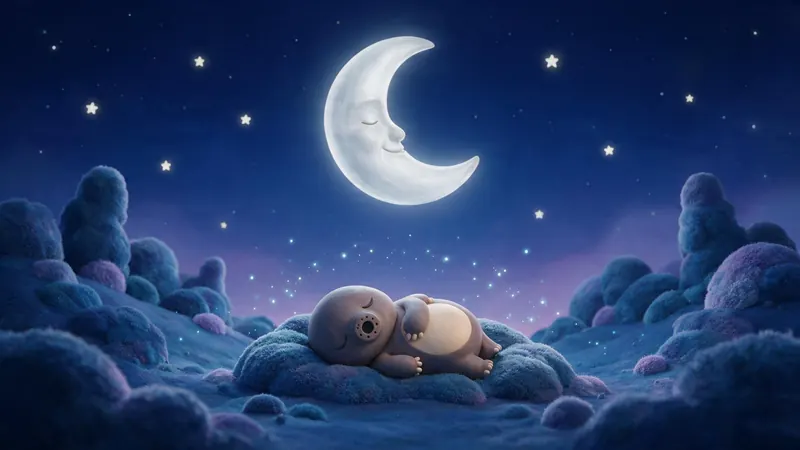
Lullabies for babies to go to sleep
For the youngest listeners the words barely matter — the parent is the medium, and the music only has to be a calm, warm, unchanging place for a voice to sit in. Ours are written and recorded for exactly that: a hummed verse rather than a performed one, the same phrases returning, everything at the pace of a slow breath out.
Under two, we would say: keep the screen out of the cot and let the lullaby be sound. The films exist for the stage after, when watching the sky settle becomes part of it. More on ages, on the parents’ page.
What we will not put in a lullaby
No key change. A key change is excitement written into music, and it works — which is exactly the problem at half past six with a baby on your shoulder.
No big finish either, and in truth no finish at all: the arrangement thins out, one part at a time, until there is nothing much left and then nothing. Nobody should be able to tell you afterwards where it ended.
No sudden instrument arriving, no percussion that could be mistaken for a door, and nothing sung loudly enough to be a performance. Lullabies for babies are not songs being shown to anyone; they are a warm, unchanging place for a familiar voice to sit in, and the best thing they can do is be slightly boring in a way that is also lovely.
Everything here is written and recorded for that, rather than borrowed from music that was made to be listened to.
Ends on a held sleeping frame
Every lullaby ends the same way, because sameness is the comfort: the picture holds, the goodnights are said name by name, and the last thing to go quiet is the light. Goodnight The Cat Nap.
Goodnight, Tardy.